
Hyaluronic Acid Injections
Elite Joint Solutions offers expert treatment to support recovery from common MSK conditions. Hyaluronic Acid injections help reduce joint pain and improve mobility by restoring natural lubrication. A safe, repeatable treatment for long-term relief from arthritis and joint conditions.


Hyaluronic Acid Injections
What Are They?
Hyaluronic acid injections have been used for several years to manage joint pain, particularly in osteoarthritis and following joint-related surgery. The injection contains components naturally found in healthy joint fluid, which help lubricate the joint and improve movement, potentially reducing pain and stiffness. More recently Ostenil has developed a product called "ostenil Tendon" which is used to treat tendon injuries such as tennis elbow, Achilles tendonitis and patella tendonitis.
Are They Available on the NHS?
Currently, hyaluronic acid injections are not licensed for routine use on the NHS. This is mainly due to the high cost of the medication and clinical trials showing outcomes that are comparable to corticosteroid injections, which are significantly more affordable—often over 30 times cheaper. That said, there is some evidence suggesting hyaluronic acid may provide longer-lasting relief, especially at the six-month mark, when compared to steroids. However, the validity and strength of these studies remain under debate.
What Are the benefits
Hyaluronic acid injections are very safe when compared to other injections such as steroid injections. Their is no risk of rupturing the tendons with Hyaluronic acid injections which adds a significant benefit. It also means that we can inject the tendons or joints immediately as the risks involved are minimal.
Because Hyaluronic acid injections are safe you can have as many as you want. This is a significant limitation with steroid injections due to the risks involved.
What Are the Risks?
One of the advantages of hyaluronic acid injections is their low risk of long-term side effects. Because the substance mimics the natural components of joint fluid, there is no strict limit on the number of injections you can receive over time—unlike corticosteroids, which require careful monitoring due to potential systemic effects.
Potential risks include:
-
Infection (as with any injection procedure)
-
injection soreness, which typically resolves within a few days Efficacy and safety of intraarticular hyaluronic acid and corticosteroid for knee osteoarthritis: A meta-analysis - PubMed
Why consider a Hyaluronic Acid injection vs a Steroid inejction
There are several reasons why a hyaluronic acid injection may be recommended instead of, or after, a steroid injection.
Firstly, if steroid injections have not provided sufficient relief, a hyaluronic acid injection may be a useful alternative. Some patients experience improved short-term pain relief as well as longer-term benefits compared with conventional steroid injections.
Another advantage is the lower risk of side effects. This is particularly important when treating conditions around tendons. Steroid injections can weaken tendon tissue and, in rare cases, increase the risk of tendon damage or rupture. Hyaluronic acid does not carry this risk, making it a safer option for injections around tendon structures.
Repeated or long-term exposure to steroids can also be associated with systemic side effects, including osteoporosis, adrenal dysfunction, and renal complications. Hyaluronic acid injections do not carry these risks because hyaluronic acid is a naturally occurring substance found within joints and soft tissues, where it helps with lubrication and shock absorption.
Because of this favourable safety profile, hyaluronic acid injections can be repeated if required, allowing ongoing symptom management without the concerns associated with repeated steroid use.
What Conditions We Commonly Treat with Hyaluronic Acid Injections
Tennis Elbow
Achilles Tendonitis


Plantar Fasciitis


Knee Arthritis
De' Quervains

Other Conditions we recommend treating with hyaluronic acid.
-
Patella Tendinitis
-
Shoulder Impingement
-
Rotator cuff
-
Ankle Arthritis
-
Toe / foot Arthritis
-
Hamstring tendinopathy / tendinitis
-
Golfers elbow
-
Shoulder Arthritis
Which Product Should I choose
At Elite Joint Solutions, we determine our treatments based on both clinical experience and the best available scientific evidence. For this reason, we do not partner exclusively with a single supplier. Instead, we work with multiple trusted companies and select the products that we believe offer the best outcomes for our patients. We currently partner with Ostenil and Biolevox. Each company provides specialised products that are particularly suited to different joints and musculoskeletal conditions. By working with more than one provider, we are able to choose the most appropriate product for each specific condition and area of the body, rather than taking a one-size-fits-all approach. Below is a brief overview of the products we use and the conditions they are most commonly recommended for.
Which Product Should I choose
Ostenil Tendon
For small tendon injuries such as tennis elbow, golfer’s elbow, and De Quervain’s tendinopathy, shoulder tendonitis we commonly recommend Ostenil Tendon.
This product contains 40 mg of hyaluronic acid in a 2 ml solution, which provides sufficient volume to surround and bathe the affected tendon. Hyaluronic acid helps to reduce friction, support tendon healing, and improve movement, which can lead to long-term pain relief and improved function.
By delivering the treatment directly to the affected tendon, it can help create an optimal environment for recovery while reducing ongoing irritation and inflammation.

Biolevox
For larger joints such as the knee, we often recommend Biolevox HA.
This product offers two key advantages:
-
High hyaluronic acid content – It contains 120 mg of hyaluronic acid, which increases the potential for the solution to coat and lubricate the entire joint, particularly in cases where osteoarthritis is more widespread.
-
Larger injection volume – The injection comes in a 4.8 ml solution, which allows for greater distribution of the hyaluronic acid throughout the joint space, helping to improve joint lubrication and potentially enhance symptom relief.
By using a product with both a high concentration and larger volume, we aim to maximise joint coverage and therapeutic benefit, especially in larger joints such as the knee.

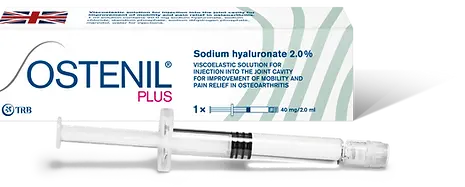
Ostenil Plus
For smaller joints such as the elbow, hand joints, and joints of the foot, we often recommend Ostenil Plus.
This product is particularly well suited to smaller joints for two main reasons:
-
Appropriate injection volume – The volume of the injection is well matched to the size of smaller joints, allowing effective treatment without overfilling the joint space.
-
Contains mannitol – Mannitol is included to help stabilise the hyaluronic acid and reduce oxidative breakdown, which may also help limit swelling and inflammation that contribute to joint pain, particularly in osteoarthritis.
These features make it a reliable and well-tolerated option for treating pain and stiffness in smaller joints.
Ostenil Tendon / Biolevox
For larger tendon injuries such as patellar tendinopathy and Achilles tendinopathy, we commonly recommend Ostenil Tendon or Biolevox HA.
These products contain 40 mg and 44 mg of hyaluronic acid respectively in a 2 ml solution, which provides sufficient volume to surround and bathe the affected tendon.
Hyaluronic acid helps to reduce friction within the tendon sheath, support the healing environment, and improve movement, which can lead to long-term pain relief and improved function.
By delivering the treatment directly to the affected tendon, the injection helps create an optimal environment for recovery while reducing ongoing irritation and inflammation.
