
What Is Joint Mobility and How Can You Improve It?

Updated: May 7
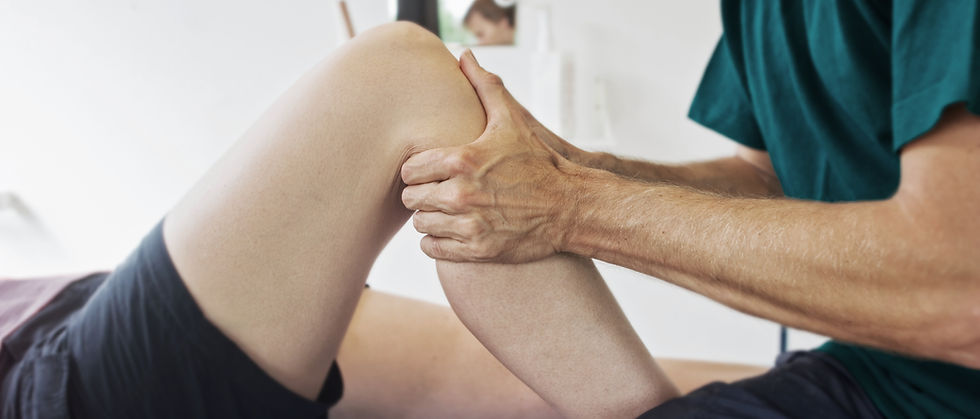
Joint mobility affects almost everything you do. Getting up from a chair, reaching overhead, walking upstairs, turning to reverse the car — all of these movements depend on your joints moving freely through their full range of motion. When that range becomes restricted, everyday life becomes harder, and the risk of pain and injury increases.
This guide explains what joint mobility actually is, what causes it to deteriorate, how it differs from flexibility, and — most importantly — what you can do to improve it.
What is joint mobility?
Joint mobility refers to the degree to which a joint can move through its full range of motion (ROM). It is a measure of passive movement — the total angular motion available at the articulation between two bones, including flexion, extension, rotation, and other directional movements depending on the joint type.
In clinical settings, range of motion is measured to assess function and track recovery. But in everyday life, joint mobility is simply how far a joint moves — and whether that movement is restricted, painful, or asymmetrical.
The body's joints are not isolated structures. The hip affects the lower back. The shoulder affects the neck. The ankle affects the knee. Poor mobility in one area often creates compensation elsewhere, which is why restricted movement tends to spread if left unaddressed.
Joint mobility vs flexibility: What's the difference?
These two terms are often used interchangeably, but they refer to different things.
Flexibility is the capacity of soft tissues — muscles, tendons, and ligaments — to lengthen. It is largely passive: you can be stretched into a position, but that doesn't mean you can actively control movement through that range.
Joint mobility refers to the active, controlled movement of a joint through its available range. It depends not just on tissue length but on neuromuscular control, joint health, and the integrity of surrounding structures.
Put simply: flexibility is about how far tissues can stretch; mobility is about how well the joint moves. You can have flexible hamstrings but poor hip mobility. Improving true joint mobility requires both tissue length and active muscular control.
What causes poor joint mobility?
Joint mobility can deteriorate for several reasons, many of which interact with each other. The most common causes include:
Sedentary behaviour and disuse
Joints that are not regularly moved through their full range will begin to stiffen. Synovial fluid — the lubricant within joints — is only distributed effectively through movement. Prolonged sitting or inactivity reduces this circulation, leading to stiffness and a gradual reduction in available range. Research published via the NHS highlights that inactivity is one of the primary contributors to musculoskeletal deterioration in adults. [1]
Ageing
As we age, cartilage naturally thins and loses water content, synovial fluid production decreases, and connective tissues become less elastic. Musculoskeletal conditions affecting joint function are among the most common reasons adults seek medical care in the UK, with prevalence increasing significantly after the age of 45. [2]
Injury and post-surgical changes
Trauma to a joint — whether from a sprain, fracture, or soft tissue tear — can lead to scar tissue formation, altered movement patterns, and ongoing stiffness if rehabilitation is incomplete. Post-surgical joints are particularly vulnerable to adhesion and restricted ROM.
Inflammatory conditions
Conditions such as rheumatoid arthritis, osteoarthritis, and ankylosing spondylitis cause joint inflammation that directly impairs mobility. A systematic review published in the Brazilian Journal of Physical Therapy found that joint ROM is consistently reduced in individuals with inflammatory arthritis compared to age-matched controls, and that this restriction correlates with functional disability.
Muscle imbalance and tightness
Tight or overactive muscles pull on joints and restrict their movement. This is common in people who perform repetitive work or exercise without adequate recovery and mobility training — for example, tight hip flexors limiting hip extension in runners or desk workers.
Joint hypomobility from previous immobilisation
When joints are immobilised — in a cast, sling, or brace — they stiffen rapidly. Restoring mobility after a period of immobilisation requires structured rehabilitation to reverse connective tissue changes and restore neuromuscular coordination.

Can you improve joint mobility?
Yes. In most cases, joint mobility can be meaningfully improved with the right approach, regardless of age or starting point.
The important caveat is that the approach matters. Passive stretching alone has limited long-term effect on joint mobility, because it addresses tissue length without building the active control needed to use that range. Effective joint mobility improvement combines movement, load, and neuromuscular engagement.
Research supports this. A 2023 meta-analysis in Springer found that combined exercise programmes — incorporating range of motion work, resistance training, and motor control exercises — produced greater and more sustained improvements in joint mobility than passive stretching in isolation, particularly in older adults and those with chronic musculoskeletal conditions. [4]
The other key factor is consistency. Joint mobility responds to regular, repeated stimulus. Sporadic effort produces limited results; frequent, low-to-moderate intensity movement over time produces genuine structural and functional change.
Understanding joint mobility treatment
When mobility loss is significant — whether due to injury, surgery, arthritis, or prolonged immobility — a structured treatment approach is often necessary. Self-directed exercise alone may not be sufficient to address the underlying causes.
Effective clinical treatment for joint mobility typically includes:
Physiotherapy and guided exercise
Physiotherapy remains the cornerstone of joint mobility treatment. A physiotherapist assesses the specific cause of restriction and designs a progressive exercise programme targeting the affected joint, surrounding musculature, and movement patterns. NHS guidance on musculoskeletal conditions consistently recommends physiotherapy as a first-line intervention. [5]
Manual therapy
Hands-on techniques — including joint mobilisation and manipulation — are used by physiotherapists and other musculoskeletal clinicians to restore passive range of motion, reduce pain, and improve joint mechanics. A review for The Journal of Manual & Manipulative Therapy supports manual therapy as an effective adjunct to exercise in cases of restricted mobility caused by capsular tightness or periarticular adhesion. [6]
Injection therapy
Where joint mobility is restricted due to significant inflammation or intra-articular pathology, injection therapies can play an important role. Corticosteroid injections reduce inflammation to enable participation in exercise and rehabilitation. Hyaluronic acid injections (viscosupplementation) are used in osteoarthritic joints to improve lubrication and reduce pain-related movement restriction. A clinician assessment is needed to determine which intervention is appropriate.
Pain management
Uncontrolled pain inhibits movement. Effective pain management — whether through medication, injection, or other means — is often a necessary first step before mobility-focused rehabilitation can be effective.
Practical steps to improve joint mobility
For those looking to support their joint mobility day-to-day, the following approaches are supported by clinical evidence:
1. Move regularly throughout the day
Gentle, frequent movement is more beneficial than a single exercise session followed by hours of stillness. Walking, cycling, and swimming are all low-impact activities that promote synovial fluid circulation and maintain joint range. NHS guidelines recommend at least 150 minutes of moderate activity per week for adults, with additional muscle-strengthening activity on two or more days. [7]
2. Incorporate mobility-specific exercises
General exercise maintains existing range; targeted mobility work actively improves it. Controlled articular rotations (CARs) — slow, active rotations through a joint's full available range under muscular tension — are widely used in physiotherapy and sports rehabilitation to develop joint mobility. Focus areas typically include hips, shoulders, thoracic spine, and ankles.
3. Strength train
Strength training improves joint stability and supports active range of motion. Resistance through range — such as deep squatting, overhead pressing, or Romanian deadlifts — simultaneously develops strength and mobility. According to a 2024 review for the Journal of Personalized Medicine on resistance training and joint health, progressive resistance exercise has been shown to reduce joint pain and improve function in individuals with both healthy joints and osteoarthritis. [8]
4. Manage load and recovery
Overloading joints without adequate recovery leads to inflammation and stiffness. Equally, avoiding load altogether leads to deconditioning. The goal is progressive loading within a tolerable range, gradually expanding capacity over time.
5. Apply heat appropriately
Heat increases tissue extensibility and is useful before mobility work or exercise. Cold therapy is more appropriate after activity or where acute inflammation is present. Heat should not be applied to acutely inflamed joints.
6. Maintain a healthy body weight
Excess weight increases the compressive load through weight-bearing joints, particularly knees, hips, and ankles. A reduction in body weight has been shown to improve both pain and mobility in joints affected by osteoarthritis, according to NICE guidance on joint conditions. [9]
7. Consider diet
Omega-3 fatty acids (found in oily fish, flaxseed, and walnuts) have anti-inflammatory properties relevant to joint health. Vitamin D deficiency is associated with musculoskeletal pain and reduced function; NHS guidance recommends that adults in the UK consider supplementation, particularly during autumn and winter. [10]
How joints become restricted: A closer look at the structures involved
To understand joint mobility, it helps to understand what limits it. Restriction can arise from several different structures:
Joint capsule: The fibrous envelope surrounding most synovial joints can thicken and contract following injury, surgery, or prolonged immobility — as seen in adhesive capsulitis (frozen shoulder).
Cartilage: Healthy cartilage enables smooth joint movement. Thinning or damage (as in osteoarthritis) increases friction and limits pain-free range.
Muscles and tendons: Tight, shortened, or hypertonic muscles restrict the joint they cross. Muscle tightness is often reversible with consistent mobility and strength work.
Ligaments: While less changeable than muscle, ligament tightness can restrict range, particularly following injury or immobilisation.
Bony changes: In advanced arthritis, bony remodelling or osteophyte formation can create structural blocks to movement that are not reversible through exercise alone.
Understanding which structure is limiting movement helps guide the right treatment approach — which is why clinical assessment is often the most efficient starting point.

Joint mobility and ageing
Joint mobility naturally declines with age, but the rate of decline is strongly influenced by how active a person is. Research consistently shows that physically active older adults maintain significantly better range of motion, joint function, and physical independence than sedentary peers.
The NHS recommends that older adults (65+) engage in activities that improve strength, balance, and flexibility on multiple days per week — noting that these activities specifically protect joint function and reduce fall risk. [11]
Importantly, it is never too late to begin. An Elsevier review of mobility interventions in older adults found meaningful improvements in range of motion and functional mobility in participants who began structured exercise programmes even in their 70s and 80s. The key is appropriate progression and consistency. [12]
When to seek professional help
Not all joint stiffness requires clinical input. Post-exercise soreness, minor morning stiffness that resolves within 30 minutes, and general tightness after a period of inactivity can often be addressed with self-directed movement.
However, you should seek assessment if:
Joint stiffness is persistent or progressively worsening
There is significant pain associated with restricted movement
Stiffness is worse in the morning and lasts more than 30–45 minutes (which may indicate an inflammatory condition)
You have had a recent injury or surgery and mobility is not recovering as expected
Restricted mobility is affecting your ability to work, exercise, or perform daily activities
Early assessment often leads to faster resolution. Delaying treatment of underlying joint conditions can allow compensatory movement patterns to develop and secondary problems to emerge.
Taking the next step with joint mobility treatment
If restricted joint mobility is affecting your daily life or recovery from injury, professional assessment can identify the cause and the most effective treatment pathway. At Elite Joint Solutions, we offer private assessments in Bristol and South Gloucestershire, providing evidence-based treatment including physiotherapy, manual therapy, and injection therapies where clinically appropriate.
References
NHS. Why we should sit less. 29 December 2022.
Truijen SPM, Boonen A, van der Kallen CJH, Koster A, van Onna M. Musculoskeletal pain in an ageing population: a cross-sectional analysis of the Maastricht study. Rheumatol Int. 2025 Aug 19;45(9):200. doi: 10.1007/s00296-025-05961-w. PMID: 40828480; PMCID: PMC12364741.
Frasson VB, Vaz MA, Morales AB, Torresan A, Telöken MA, Gusmão PDF, Crestani MV, Baroni BM. Hip muscle weakness and reduced joint range of motion in patients with femoroacetabular impingement syndrome: a case-control study. Braz J Phys Ther. 2020 Jan-Feb;24(1):39-45. doi: 10.1016/j.bjpt.2018.11.010. Epub 2018 Nov 20. PMID: 30509854; PMCID: PMC6994301.
Alizadeh S, Daneshjoo A, Zahiri A, Anvar SH, Goudini R, Hicks JP, Konrad A, Behm DG. Resistance Training Induces Improvements in Range of Motion: A Systematic Review and Meta-Analysis. Sports Med. 2023 Mar;53(3):707-722. doi: 10.1007/s40279-022-01804-x. Epub 2023 Jan 9. PMID: 36622555; PMCID: PMC9935664.
NHS Health Education England. Musculoskeletal First Contact Practitioner Services.
Kirker K, O'Connell M, Bradley L, Torres-Panchame RE, Masaracchio M. Manual therapy and exercise for adhesive capsulitis: a systematic review with meta-analysis. J Man Manip Ther. 2023 Oct;31(5):311-327. doi: 10.1080/10669817.2023.2180702. Epub 2023 Mar 2. PMID: 36861780; PMCID: PMC10566414.
NHS. Physical activity guidelines for adults aged 19 to 64. 22 May 2024.
Lim J, Choi A, Kim B. The Effects of Resistance Training on Pain, Strength, and Function in Osteoarthritis: Systematic Review and Meta-Analysis. J Pers Med. 2024 Nov 30;14(12):1130. doi: 10.3390/jpm14121130. PMID: 39728043; PMCID: PMC11676110.
National Institute for Health and Care Excellence. Management of osteoarthritis. 2022.
NHS. Vitamin D. 3 August 2020.
NHS. Physical activity guidelines for older adults. 15 August 2024.
Di Lorito C, Long A, Byrne A, Harwood RH, Gladman JRF, Schneider S, Logan P, Bosco A, van der Wardt V. Exercise interventions for older adults: A systematic review of meta-analyses. J Sport Health Sci. 2021 Jan;10(1):29-47. doi: 10.1016/j.jshs.2020.06.003. Epub 2020 Jun 7. PMID: 32525097; PMCID: PMC7858023.


Comments