
Hip Bursitis / GTPS Exercises: Best Moves to Relieve Pain and Rebuild Strength Winterbourne

Updated: Jul 29

Hip bursitis — also known as trochanteric bursitis or greater trochanteric pain syndrome (GTPS) — is one of the most common causes of outer hip pain. The discomfort it causes, from walking and climbing stairs to simply lying on your side at night, can significantly affect daily life. The good news is that targeted hip bursitis exercises are one of the most effective ways to reduce inflammation, rebuild strength, and prevent the condition from coming back.
If your symptoms don't improve within six weeks of following this guidance, or if they are particularly severe from the outset, it may be appropriate to consider further treatment options — including a steroid injection.
What is hip bursitis?
Hip bursitis occurs when the bursa — a small, fluid-filled sac that cushions the bones and soft tissues around the hip joint — becomes inflamed. The bursa most commonly affected sits over the greater trochanter, the bony point on the outer side of your upper thigh where the femur meets the hip. This is why the condition is also referred to as trochanteric bursitis or greater trochanteric pain syndrome. [1]
The pain typically feels like a sharp or aching sensation on the outside of the hip or upper thigh. It is often worse when lying on the affected side, getting up from sitting, walking, or climbing stairs. It can also be tender to the touch — you can usually locate the sore spot with your fingers. If your pain is deep in the groin or feels internal rather than on the outer surface of the hip, it may have a different cause and is worth discussing with a clinician.
Common contributing factors include age (it is most common in adults over 40), excess body weight, repetitive hip movements (such as running or cycling), hip injuries, and weakness in the gluteal muscles.
How long does recovery from hip bursitis take?
Recovery from hip bursitis takes time and consistency. On average, it takes around three months of regular rehabilitation to see significant improvement. Most people benefit from spending at least 15 minutes per day on targeted exercises. Progress may feel gradual, but steady commitment to the exercises below is one of the most important things you can do to support your recovery.

Hip bursitis / Exercises for GTPS
The exercises below focus on two things: stretching the tight structures that place load on the bursa, and strengthening the muscles — particularly the gluteals — that support the hip joint. Research supports the role of targeted strengthening in reducing pain and inflammation in trochanteric bursitis. Both are important for lasting relief.
Aim to perform these exercises at least three times per week, gradually increasing repetitions as your strength improves. Always warm up first with a few minutes of light walking or gentle marching on the spot. Move slowly and with control, and stop if you experience sharp or worsening pain.
1. Side-lying hip abduction
This exercise strengthens the gluteus medius — a key stabilising muscle on the outer hip that, when weak, increases pressure on the bursa.
Lie on your unaffected side with your legs straight.
Slowly lift the top (affected) leg upward, keeping it straight, to about 30 cm off the bottom leg.
Hold for 2–3 seconds, then lower it slowly.
Repeat 10–15 times for 2–3 sets.
As you get stronger, you can add a light resistance band around your thighs to increase the challenge.
2. Clamshell
The clamshell targets the hip abductors and external rotators, improving pelvic stability.
Lie on your side with knees bent at 90 degrees and feet together.
Keeping your feet touching and your pelvis still, lift the top knee as high as you can without rolling your hips backward.
Hold for 2–3 seconds, then lower.
Repeat 10–15 times for 2–3 sets.
A resistance band just above the knees can be added as you progress.

3. Glute bridge
This exercise strengthens the gluteus maximus, which stabilises the hip and reduces strain on the bursa.
Lie on your back with knees bent and feet flat on the floor.
Squeeze your buttocks and lift your hips off the floor until your body forms a straight line from shoulders to knees.
Hold for 2–3 seconds at the top, then lower slowly.
Repeat 10–15 times for 2–3 sets.

4. Standing hip extension
This movement activates the gluteus maximus and helps with hip stability during everyday activities like walking.
Stand behind a chair or hold onto a wall for balance.
Keeping your leg straight, slowly move the affected leg backward without arching your lower back.
Hold for 3 seconds, then return to the starting position.
Repeat 10–15 times on each leg.
5. Iliotibial band stretch (standing)
The iliotibial (IT) band runs along the outer thigh and can become tight with bursitis, increasing friction over the bursa.
Stand upright and cross the affected leg behind the other.
Lean your hips toward the side of the unaffected leg until you feel a stretch along the outside of your hip and thigh.
Hold for 20–30 seconds and repeat 3 times.

6. Piriformis stretch (figure-four)
This stretch releases the piriformis muscle deep in the buttock, which can affect hip alignment and contribute to outer hip pain.
Lie on your back with both knees bent.
Cross the affected leg over the other, resting the ankle on the opposite knee.
Gently pull the bottom knee toward your chest until you feel a stretch in the buttock.
Hold for 20–30 seconds and repeat 2–3 times.
7. Hip flexor stretch
Tight hip flexors alter pelvic alignment and can worsen bursitis symptoms.
Kneel on one knee with the other foot in front, forming a 90-degree angle at both knees.
Gently push your hips forward while keeping your back straight until you feel a stretch at the front of the hip.
Hold for 20–30 seconds and repeat 2–3 times on each side.
8. Seated figure-four stretch
A gentler version of the piriformis stretch, suitable if getting up and down from the floor is difficult.
Sit on a chair with your feet flat on the floor.
Place the ankle of the affected leg on the opposite knee.
Gently press down on the raised knee until you feel a stretch in the hip.
Hold for 20–30 seconds and repeat 3 times.
Resistance band rehabilitation
As your strength improves, resistance bands are a valuable tool for progressing your hip bursitis exercises. Bands come in different colours representing different resistance levels. Start with the lightest band to allow your body to adapt safely, then gradually progress to higher resistance as your strength builds. The clamshell and side-lying abduction exercises above are particularly effective when combined with a resistance band. Theraband resistance bands are a widely recommended option.
What is the best exercise for hip bursitis?
There is no single best exercise, but the evidence consistently points to gluteal strengthening as the most important component of hip bursitis rehabilitation. Of the exercises above, side-lying hip abduction and the glute bridge are typically the highest priority — they directly target the muscles that stabilise the outer hip and reduce mechanical load on the inflamed bursa.
A 2024 study published in Physiotherapy found that a structured exercise programme focused on hip abductor strengthening produced significant improvements in pain and function in patients with greater trochanteric pain syndrome. [2]
That said, combining strengthening with regular stretching — particularly of the IT band and hip flexors — gives the best overall results. Consistency across all the exercises above will outperform any single movement.
Does walking improve hip bursitis?
Yes, in most cases — but with some caveats. Gentle walking helps to maintain blood flow to the area, reduce stiffness, and prevent the muscles around the hip from decondition. It is generally encouraged as part of recovery.
However, walking too far or too fast, particularly on hard surfaces, can aggravate symptoms. Start with shorter, comfortable distances and build up gradually. Use supportive, well-cushioned footwear, and avoid walking on significantly sloped surfaces or cambers, which can place uneven load on the outer hip.
If walking consistently makes your pain worse, speak to a clinician — it may be a sign that additional support is needed before progressing your activity.
What not to do with hip bursitis
Knowing what aggravates hip bursitis is just as important as knowing which exercises to do. The following are common activities and positions that can worsen inflammation or delay recovery.
Positions and habits to avoid:
Lying directly on the affected hip without a cushion between the knees
Crossing your legs when sitting
Sitting in very low chairs or soft sofas that cause you to sink into hip flexion
Sitting or standing for prolonged periods without moving
Activities to limit or modify:
High-impact exercise such as running, jumping, or step aerobics
Deep squats or wide-stance lunges
Excessive stair climbing or hill walking, especially when symptoms are acute
Any exercise that consistently reproduces your pain during or after the session
Things that can worsen it without you realising:
Leg length discrepancy (one leg shorter than the other)
Scoliosis or poor postural habits
Weak core or poor pelvic control during movement
If pain worsens during any activity, stop and rest. Persistent aggravation can prolong recovery.
Can bursitis go away with exercise?
For many people, yes. Hip bursitis often responds well to a consistent programme of targeted exercises, particularly when combined with other self-care measures. Research and clinical experience suggest that most cases improve significantly within three months of regular rehabilitation, without the need for invasive treatment. You can find videos of exercises to help with hip bursitis on our you tube channel:
That said, exercise works best when the underlying causes are also addressed — for example, correcting muscle imbalances, managing body weight, and modifying activities that trigger the pain. In cases where symptoms are severe or have not improved after six weeks of conservative management, a steroid injection into the bursa can be a highly effective next step, often providing a window of reduced pain that makes it easier to engage fully with rehabilitation.
Supporting your recovery beyond exercise
Exercise is the foundation of hip bursitis recovery, but a few additional self-care strategies can make a meaningful difference:
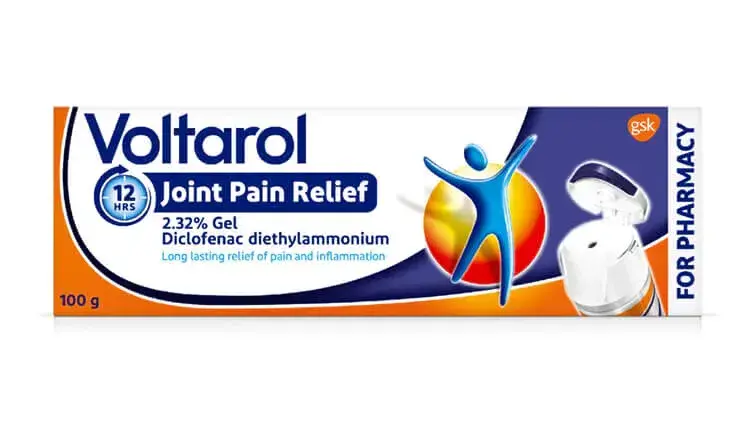
Self-massage and topical gels: Daily self-massage around the outer hip using a combination of gels — such as Voltarol (anti-inflammatory), Deep Heat, or an ice/cooling gel — can help reduce inflammation and relieve local tension. Spend 5–10 minutes on this each day. Voltarol gel is available from Boots.
Ice or heat: Apply an ice pack for 15–20 minutes after exercising to manage swelling and soreness. Some people find heat helpful before exercise to loosen the area — experiment to find what works best for you.
Sleep position: Avoid lying directly on the painful side. If you sleep on your side, place a pillow between your knees to reduce the stretch on the outer hip.
Footwear: Wear supportive, cushioned footwear during the day to reduce shock through the hip.

Weight management: Maintaining a healthy weight reduces mechanical pressure on the hip joint and surrounding structures, which can help prevent flare-ups.
Prolonged sitting: Use a cushion or pad when sitting for long periods, and aim to stand and move briefly every 30–45 minutes.
We offer our unique combined approach of soft tissue massage, joint manipualtion and progressive rehab teatment to help you recover from your GTPS. This typically takes between 4-10 sessions to see improvements. To find out more visit our dedicated physiotherapy page
Other Treatments available
Here at Elite joint solutions we offer advanced treatments such as hyaluronic acid injections, Steroid injections and dry needling. To find out more about these treatments visit my blog titled hip Bursitis: Injection therapy.
When to seek professional help for hip bursitis
While most cases of hip bursitis improve with the measures described above, there are circumstances where professional assessment is important. Seek advice from a clinician if:
Your pain has not improved after six weeks of consistent home management
Symptoms are severe or significantly limiting your daily activities
There is visible swelling, redness, or warmth around the hip
The pain worsens rather than gradually improving
You are unsure whether hip bursitis is the correct diagnosis
In these situations, a clinician can confirm the diagnosis, rule out other causes of hip pain, and discuss options such as targeted physiotherapy or a steroid injection. At Elite Joint Solutions, we offer expert assessment and accurately delivered injection therapy for patients in Bristol and South Gloucestershire. Book a consultation if you’d like personalised support.
References
NHS. Bursitis. Page last reviewed: 30 October 2023.
Kjeldsen, T., Hvidt, K.J., Bohn, M.B., Mygind-Klavsen, B., Lind, M., Semciw, A.I. and Mechlenburg, I., 2024. Exercise compared to a control condition or other conservative treatment options in patients with Greater Trochanteric Pain Syndrome: a systematic review and meta-analysis of randomized controlled trials. Physiotherapy, 123, pp.69-80.


Comments